

10 Weekly Tips to Brighter Plants. Gardening can be challenging, but with these insider tips, you’ll reap Huge rewards.
Episodes
Saturday Oct 21, 2023
Saturday Oct 21, 2023
Watters Garden Center offers free garden classes every Saturday at 9:30 AM, both in-person and online. The classes are relevant to the Southwest climate and cover a variety of topics, including autumn colors, succulents, cacti, and showy shrubs. The classes are recorded and available on the Watters Garden Center YouTube channel and website.
The last 3 classes of the season are:
- Best Autumn Colors that you can Plant and Enjoy at Home
- Succulents, Cacti, and Low Maintenance Gardens
- Showy Shrubs of Autumn
These classes will cover how to choose, plant, and care for plants that will thrive in the Southwest climate. We will take a break in November and December and hit it hard again beginning in mid January as next year’s garden season is on the horizon.
Watters Garden Center is committed to helping people garden better in the Southwest. We believe that everyone has the right to a beautiful garden, and we provide the knowledge and resources people need to succeed.
#wattersgardencenter, #wattersgardencenteraz, #mountaingardenerpodcast, #top10gardener,
#gardenclasses, #bettergardening

Friday Oct 20, 2023
Friday Oct 20, 2023
Watters Premium Plant Food: The Best Plant Food for Really Healthy Plants
Looking for the best plant food to help your plants thrive? Look no further than Watters Premium Plant Food! This all-purpose fertilizer is specially formulated to provide your plants with the nutrients they need to produce lush, green foliage, vibrant blooms, and delicious fruits and vegetables.
Watters Premium Plant Food contains a balanced blend of nitrogen, phosphorus, and potassium (NPK), as well as essential micronutrients like iron, magnesium, and calcium. This nutrient-rich formula helps to promote strong root growth, healthy leaf development, and abundant flowering and fruiting.
Watters Premium Plant Food is also easy to use. Simply mix it with water and apply it to the soil around your plants according to the package directions. You can use it on all types of plants, including flowers, vegetables, trees, shrubs, and houseplants.
Here are just a few of the benefits of using Watters Premium Plant Food:
- Promotes strong root growth
- Encourages healthy leaf development
- Boosts flowering and fruiting
- Increases resistance to pests and diseases
- Improves overall plant health and vigor
How to use Watters Premium Plant Food:
- Apply to the soil around your plants, being careful to avoid the leaves.
- Water the plants thoroughly after applying the fertilizer.
- Fertilize your plants every 2-4 weeks during the growing season.
Tips for getting the most out of Watters Premium Plant Food:
- Water your plants regularly, especially during hot weather.
- Mulch around your plants to help retain moisture and suppress weeds.
- Test your soil every few years to determine the pH level and nutrient content.
- Apply fertilizer according to the package directions and avoid over-fertilizing.
With Watters Premium Plant Food, you can give your plants the nutrients they need to thrive and produce their best blooms, fruits, and vegetables.
#wattersgardencenter, #wattersgardencenteraz, #mountaingardenerpodcast, #top10gardener, #fertilizer, #plantfood

Thursday Oct 19, 2023
Thursday Oct 19, 2023
Evergreens are a great way to add year-round beauty and interest to your landscape. They come in a variety of shapes, sizes, and colors, so there is an evergreen that is perfect for every landscape.
Here are our top evergreens for every landscape:
Vanderwolf Pine
Is a beautiful and hardy evergreen tree that is perfect for any landscape. It has a dense, pyramidal habit and grows to a height of 20-30 feet. The needles are a deep green color and are slightly twisted. The cones are small and round, and they mature in the fall. The Vanderwolf Pine is very tolerant of drought and heat, and it is also resistant to pests and diseases.
Austrian Pine
Is a fast-growing evergreen tree that is perfect for hedges, screens, or windbreaks. It has a dense, pyramidal habit and grows to a height of 50-60 feet. The needles are a dark green col-or and are short and stiff. The cones are large and oval-shaped, and they mature in the fall. The Austrian Pine is very tolerant of drought and heat, and it is also resistant to pests and diseases.
Oregon Green Pine
Is a slow-growing evergreen tree that is perfect for smaller landscapes. It has a dense, pyramidal habit and grows to a height of 15-20 feet. The needles are a deep green color and are soft and flexible. The cones are small and round, and they mature in the fall. The Oregon Green Pine is very tolerant of drought and heat, and it is also resistant to pests and diseases.
Arizona Cypress
Is a fast-growing evergreen tree that is perfect for hedges, screens, or wind-breaks. It has a dense, pyramidal habit and grows to a height of 50-60 feet. The foliage is a silvery-blue color and is very soft and fine. The cones are small and round, and they mature in the fall. The Arizona Cypress is very tolerant of drought and heat, and it is also resistant to pests and diseases.
Spruce
Are evergreens that are known for their soft, needle-like leaves and pyramidal shape. They come in a variety of sizes and shapes, from dwarf shrubs to tall trees. Spruces are also very tolerant of a variety of soil conditions and climates.
Juniper
Are versatile evergreens that can be used for groundcovers, hedges, or foundation plantings. They come in a variety of sizes and shapes, from low-growing shrubs to tall trees. Junipers are also very tolerant of a variety of soil conditions and climates.
When choosing evergreens for your landscape, be sure to consider the size and shape of the plants, as well as the soil conditions and climate. With a little planning, you can choose the perfect evergreens to add year-round beauty and interest to your landscape.
Visit Watters Garden Center for more information on evergreens and other landscape plants.
#wattersgardencenter, #wattersgardencenteraz, #mountaingardenerpodcast, #top10gardener, #Evergreen

Wednesday Oct 18, 2023
Wednesday Oct 18, 2023
Evergreens prefer acidic soil, so aluminum sulfate is a great mineral to use to brighten them up. It contains aluminum and sulfur, and it creates an ideal growing environment for evergreens. In addition to Watters 7-4-4 Plant Food Aluminum sulfate also helps to brighten evergreens by developing a silvery coating on their leaves, which can reflect sunlight.
To use aluminum sulfate on evergreens, simply apply it to the soil around the base of the plants. Be sure to follow the directions on the product label. In addition to Watters 7-4-4 Plant Food Aluminum sulfate is a very effective fertilizer for evergreens in the Fall, but it can be harmful if overused.
Here are some additional tips for growing bright and vibrant evergreens:
- Water regularly, but don't overwater.
- Place in a sunny location.
- Avoid planting in areas with poor drainage.
- Fertilize in the spring with Watters 7-4-4 Plant Food.
- With proper care, you can enjoy the beauty of bright and vibrant evergreens in your landscape for many years to come!
Visit Watters Garden Center for more information on how to grow and care for evergreens.
#wattersgardencenter, #wattersgardencenteraz, #mountaingardenerpodcast, #top10gardener, #fertilizer
Tuesday Oct 17, 2023
Tuesday Oct 17, 2023
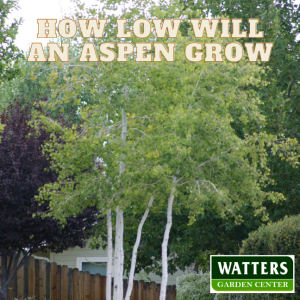
Aspens are a beautiful and iconic tree species, but how low will they grow? The answer depends on climate, soil conditions, and elevation. In general, aspens prefer higher elevations, but can tolerate some dry conditions and grow as low as 4,000 feet above sea level.
If you are interested in planting an aspen tree in your landscape, choose a location at the right elevation and with the right soil conditions. Plant your aspen tree in the fall and water it regularly, especially during the first year. Fertilize your aspen tree in the spring and mulch around it to help retain moisture and suppress weeds. With proper care, your aspen tree can thrive for many years, even at lower elevations.
Here are some additional tips for growing aspen trees at lower elevations:
- Put your aspen tree on drip irrigation. This will help you to water deeply and less often, which is important for aspen trees.
- Be careful not to overwater your aspen tree. Aspen trees are more likely to die from overwatering than from underwatering.
- Mulch around your aspen tree to help retain moisture and suppress weeds.
- Fertilize your aspen tree in the spring with a balanced fertilizer.
With proper care, you can enjoy the beauty of aspen trees in your landscape, even at lower elevations.
#wattersgardencenter, #wattersgardencenteraz, #mountaingardenerpodcast, #top10gardener, #aspen

Monday Oct 16, 2023
Monday Oct 16, 2023
Chrysanthemums are a versatile and beautiful flower that can be used in a variety of ways in landscape design. They come in a wide range of colors, shapes, and sizes, so there is a chrysanthemum perfect for any style of garden.
Here are a few tips from Watters Garden Center on how to use chrysanthemums in your landscape:
- Plant chrysanthemums in full sun or partial shade. Chrysanthemums prefer well-drained soil. If your soil is heavy clay, you may want to amend it with compost or sand before planting.
- Water chrysanthemums regularly but be careful not to overwater them. Chrysanthemums do not like to sit in water, so it is important to let the soil dry out slightly between waterings.
- Fertilize chrysanthemums every few weeks with a balanced fertilizer, such as Watters Flower Power. This will help your chrysanthemums produce more flowers.
- Deadhead chrysanthemums regularly to encourage new growth and flowering. To deadhead a chrysanthemum, simply remove the spent flower heads from the plant.
Here are a few specific ideas for how to use chrysanthemums in your landscape:
- Plant chrysanthemums directly in containers you bought them in. This is a great option if you have a small garden, if you want to be able to move your chrysanthemums around to different locations, or if you want to treat them as an annual and pop them out after the fall season ends and plant winter flowers, such as pansies, in their place.
- Use chrysanthemums to attract butterflies and bees. Chrysanthemums are a great way to attract pollinators to your garden.
- Use chrysanthemums to create a festive fall display. Chrysanthemums can be used to create a variety of festive fall displays. For example, you can plant them in pumpkins or gourds, or you can use them to create a fall wreath or centerpiece.
No matter how you choose to use them, chrysanthemums are a beautiful and versatile flower that is sure to add interest and appeal to your landscape.

Saturday Oct 14, 2023
Saturday Oct 14, 2023
Conscious capitalism is a business philosophy that emphasizes the importance of social and environmental responsibility alongside financial profit. Conscious businesses strive to create a positive impact on the world by treating their stakeholders fairly, including employees, customers, suppliers, and the communities in which they operate.
Communities play an important role in conscious capitalism. Conscious businesses are committed to supporting the communities in which they operate. They do this by creating jobs, investing in local businesses, and donating to charities and nonprofits.
Conscious businesses also work to protect the environment. They do this by using sustainable practices, reducing their emissions, and conserving resources.
Here are some examples of how conscious businesses support communities:
- Employee ownership: Some conscious businesses are employee-owned, which gives employees a stake in the success of the company and encourages them to be more engaged and productive.
- Fair wages and benefits: Conscious businesses pay their employees fair wages and provide them with good benefits. This helps to ensure that employees can earn a decent living and support their families.
- Local sourcing: Conscious businesses source their goods and services from local suppliers whenever possible. This helps to support the local economy and create jobs.
- Charitable giving: Conscious businesses donate to charities and nonprofits that support the communities in which they operate. This helps to fund important programs and services that benefit the community.
- Environmental protection: Conscious businesses use sustainable practices, reduce their emissions, and conserve resources. This helps to protect the environment and create a more sustainable future for all.
Here are some ways that communities can support conscious capitalism:
- Shop at conscious businesses: When you shop at conscious businesses, you are supporting businesses that are committed to making a positive impact on the world.
- Invest in conscious businesses: If you have the financial means, you can invest in conscious businesses. This helps to provide them with the capital they need to grow and succeed.
- Promote conscious capitalism: Talk to your friends, family, and colleagues about conscious capitalism. Encourage them to support conscious businesses and invest in conscious businesses.
By working together, communities and conscious businesses can create a more sustainable and equitable world.
#wattersgardencenter, #wattersgardencenteraz, #mountaingardenerpodcast, #Top10Gardener, #community, #nonprofit

Friday Oct 13, 2023
Friday Oct 13, 2023
Javelinas are wild animals that are native to the southwestern United States and Mexico. They are also known as peccaries and are related to pigs. Javelinas can be destructive to gardens, as they will eat a variety of plants, including vegetables, fruits, and flowers.
If you live in an area where javelinas are present, it is important to take steps to protect your garden. Here are a few tips:
- Choose plants that are not palatable to javelinas. Some plants that javelinas tend to avoid include cacti, succulents, and plants with thorns or prickles.
- Plant thorny or prickly plants around the perimeter of your garden. This will create a barrier that javelinas are less likely to cross.
- Install a fence or barrier to keep javelinas out of your garden. A fence should be at least 4 feet tall and have a gate that closes securely.
- Use motion-activated sprinklers or other deterrents to scare javelinas away.
- Remove any food sources that may attract javelinas, such as pet food or fallen fruit.
- Harvest your crops as soon as they are ripe to avoid attracting javelinas.
Here are some additional tips for creating javelina-proof gardens:
- Plant your garden in a location that is not attractive to javelinas. Avoid planting your garden near areas where javelinas like to feed, such as oak trees or mesquite trees.
- Keep your garden clean and free of debris. Javelinas are attracted to areas where there is a lot of food and shelter.
- Consider using a coyote decoy or other predator decoy to scare javelinas away.
- Contact Us at the Garden Center for more information on how to protect your garden from javelinas and a list of Javelina Resistant Plants
With a little planning and effort, it is possible to create a javelina-proof garden. By following these tips, you can enjoy your garden without having to worry about damage from javelinas.
#wattersgardencenter, #wattersgardencenteraz, #mountaingardenerpodcast, #Top10Gardener, #Javelina, #gardenpests, #animals

Thursday Oct 12, 2023
Thursday Oct 12, 2023
Gardening is a wonderful hobby for everyone, but it can be especially rewarding for women. Gardening has been shown to have a number of benefits for women, including reducing stress, improving mood, and increasing physical activity.
If you're a woman who's interested in gardening, here are a few tips to help you get started:
- Choose the right plants. When choosing plants for your garden, consider your climate, soil type, and the amount of sunlight your garden receives. You should also choose plants that you enjoy looking at and caring for.
- Prepare your soil. Good soil is essential for healthy plants. Before you plant anything, be sure to test your soil and add any necessary amendments.
- Water your plants regularly. Plants need water to survive, but be careful not to overwater them. Overwatering can lead to root rot and other problems.
- Fertilize your plants regularly. Fertilizing helps to give your plants the nutrients they need to thrive. Be sure to follow the instructions on the fertilizer label.
- Mulch your plants. Mulch helps to retain moisture in the soil and suppress weeds.
- Deadhead your plants. Deadheading is the process of removing spent flowers. This encourages the plant to produce more flowers.
- Protect your plants from pests and diseases. There are a number of ways to protect your plants from pests and diseases, such as using insecticidal soap or companion planting.
Here are some additional tips for women gardeners:
- Find a gardening mentor. If you know someone who is experienced in gardening, ask them for advice and guidance.
- Join a gardening club or online forum. There are many gardening clubs and online forums where you can connect with other gardeners and learn from their experiences.
- Don't be afraid to experiment. Gardening is a trial-and-error process. Don't be afraid to try new things and see what works best for you and your garden.
Gardening can be a fun and rewarding hobby for women of all ages. By following these tips, you can create a beautiful and healthy garden that you will enjoy for years to come.
Additional tips for women gardeners:
- Wear comfortable clothing and shoes. Gardening can be a physical activity, so it's important to wear comfortable clothing and shoes that will protect you from the elements.
- Take breaks. Gardening can be hard work, so be sure to take breaks often to rest and hydrate.
- Don't be afraid to ask for help. If you're struggling with a particular task, don't be afraid to ask for help by stopping in at the Garden Center 1815 Iron Springs Rd in Prescott AZ 86305.
#wattersgardencenter, #wattersgardencenteraz, #mountaingardenerpodcast, #Top10Gardener, #gardeningbenefits,

Wednesday Oct 11, 2023
Wednesday Oct 11, 2023
Tarantulas are large, hairy spiders that are native to many parts of the world, including Arizona. They are often feared and misunderstood, but tarantulas can actually be beneficial to your garden.
Tarantulas are natural predators of many common garden pests, such as crickets, cockroaches, and beetles. They help to keep these pests under control, which can improve the health of your plants.
Tarantulas also help to aerate the soil as they burrow and search for food. This can improve drainage and root growth.
In addition, tarantulas are relatively low-maintenance creatures. They do not require a lot of food or water, and they are not known to damage plants.
Of course, there are also some potential downsides to having tarantulas in your garden. Tarantulas can be venomous, although their bites are rarely fatal to humans. Their venom is more potent than a bee sting, but it is usually not a serious medical concern.
Tarantulas can also be large and hairy, which can be frightening to some people. If you have small children or pets, you may want to reconsider having tarantulas in your garden.
Overall, tarantulas can be beneficial to your garden. They are natural predators of pests and they help to aerate the soil. However, it is important to be aware of the potential risks before deciding whether or not to have tarantulas in your garden.
Here are some tips for coexisting with tarantulas in your garden:
- Be respectful of tarantulas and avoid disturbing them.
- Wear gloves when handling tarantulas, even if they are dead.
- If you have small children or pets, supervise them closely when they are in the garden.
- If you are concerned about tarantulas in your garden, you can consult with a pest control professional.
#wattersgardencenter, #wattersgardencenteraz, #mountaingardenerpodcast, #Top10Gardener # tarantulas, #spiders
Tuesday Oct 10, 2023
Tuesday Oct 10, 2023
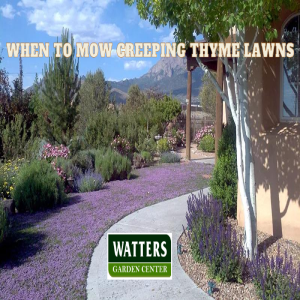
Creeping thyme lawns are a beautiful and low-maintenance alternative to traditional grass lawns. They are also very drought-tolerant, making them a great choice for water-scarce areas.
While creeping thyme lawns do not require regular mowing, it is a good idea to mow them once or twice a year to keep them looking their best and to encourage new growth. The best time to mow creeping thyme is in the spring, after the last frost, and again in the fall, after the flowers have faded.
To mow a creeping thyme lawn, use a sharp mower blade set to a high setting. Be careful not to mow the thyme too short, as this can damage the plants.
Here are some additional tips for mowing creeping thyme lawns:
- Mow on a dry day to avoid spreading fungal diseases.
- Mow in the direction of the thyme's growth.
- Avoid mowing when the thyme is in bloom.
- Water the thyme deeply after mowing to help it recover.
If you choose to mow your creeping thyme lawn more often than once or twice a year, be sure to set the mower blade to a very high setting and avoid mowing the thyme too short.
Here are some benefits of mowing creeping thyme lawns:
- It helps to remove dead leaves and stems, which can promote new growth.
- It helps to keep the thyme lawn looking neat and tidy.
- It can help to discourage weeds.
- It can help to encourage the thyme to spread.
Overall, mowing creeping thyme lawns is not necessary, but it can be beneficial to do so once or twice a year to keep them looking their best and to encourage new growth.

Monday Oct 09, 2023
Monday Oct 09, 2023
Fall is a beautiful time of year, with the leaves changing color and the air becoming crisp and cool. And what better way to enjoy the fall season than with a riotous display of flowers in your yard or garden?
Watters Garden Center has a wide variety of flowers that bloom in the fall, so you're sure to find the perfect ones to add color and excitement to your landscape. Here are our top 10 picks:
- Mums (Chrysanthemums) are quintessential fall flowers, and for good reason. They come in a wide variety of colors and bloom shapes, so you're sure to find the perfect ones to match your style.
- Asters are another popular fall flower. They produce clusters of small, daisy-like blooms in shades of purple, blue, and white.
- Pansies are a great choice for fall gardens because they can tolerate cooler temperatures. They come in a wide variety of colors, including bright yellow, orange, and purple.
- Violas are similar to pansies, but they tend to be smaller and more delicate. They're also very cold-hardy, making them a good choice for late fall blooms.
- Sedums are low-maintenance plants that thrive in almost any garden. They produce clusters of small, star-shaped flowers in shades of pink, red, and yellow.
- Gaillardia is a perennial with a long bloom period from late spring through autumn. The bright, daisy-like flowers attract butterflies and other pollinators.
- Marigolds are another long-blooming flower that is perfect for fall gardens. They come in a variety of colors, including bright yellow, orange, and red.
- Salvias are a diverse group of plants that includes many fall bloomers. Some popular varieties include Russian sage, Mexican sage, and pineapple sage.
- Snapdragons are a cool-season flower that can bloom from spring until frost. They come in a variety of colors, including bright yellow, orange, red, pink, and purple.
- Alyssum is a low-growing flower that produces clusters of small, sweet-smelling blooms in shades of white, pink, and purple.
Fall is a great time to plant flowers, so head to Watters Garden Center today and pick up a few of these top bloomers!
#wattersgardencenter, #wattersgardencenteraz, #top10gardener, #fallflowers

Sunday Oct 08, 2023
Sunday Oct 08, 2023
Fall is a great time to prepare your garden for the winter ahead. By following a few simple steps, you can ensure that your plants are healthy and strong next spring.

Saturday Oct 07, 2023
Saturday Oct 07, 2023
Autumn is a beautiful time of year, with its vibrant leaves and crisp air. And one of the best things about autumn is the bright shrubs that add a touch of color to the landscape.
In this video, we'll share our top picks for the brightest shrubs of autumn, as well as tips on how to care for them.
Here are a few of our favorites:
- Burning Bush: This shrub is known for its fiery red leaves in the fall.
- Japanese Maple: Japanese maples come in a variety of colors, including red, orange, and yellow.
- Virginia Creeper: This vine is a great way to add color to walls or fences.
- Red Twig Dogwood: This shrub has red stems that are especially vibrant in the winter.
- Winterberry: This shrub produces bright red berries in the fall and winter.
- Barberry: Barberry shrubs come in a variety of colors, including red, purple, and yellow.
- Sumac: Sumac shrubs produce clusters of red or orange berries in the fall.
- Golden Spirea: This shrub has yellow leaves that turn orange or red in the fall.
- Euonymus: This shrub is known for its winged stems and bright red autumn foliage.
Tips for caring for the brightest shrubs of autumn:
- Plant them in the right location. Most autumn shrubs prefer full sun to partial shade.
- Water them regularly. Even though the weather is cooler in the fall, your plants still need water. Be sure to water them deeply once a week, or more often if the weather is dry.
- Fertilize them in the spring. A balanced fertilizer will help your plants to produce more leaves and flowers.
- Mulch around them. Mulching helps to retain moisture in the soil and protect the roots from the cold.
- Prune them regularly. Pruning helps to control the size and shape of your shrubs, and it also removes any dead or diseased branches.
Visit Watters Garden Center for all your autumn shrub needs! We have a wide selection of autumn shrubs, as well as fertilizers, mulch, and other gardening supplies. Our staff is always happy to help you choose the right products for your garden and answer any questions you may have.
The brightest shrubs of autumn: tips from Watters Garden Center, the top 10 gardener podcast.
#autumn, #fall, #shrubs#, brightestshrubsofautumn, #burningbush

Friday Oct 06, 2023
Friday Oct 06, 2023
Fall is a great time to prepare your garden for the winter ahead. By following a few simple steps, you can ensure that your plants are healthy and strong next spring.
In this video, we'll share our top 10 tips for a healthy fall garden:
- Clean up your garden beds. Remove any dead or diseased plants and weeds. This will help to prevent pests and diseases from overwintering in your garden.
- Fertilize your plants. A balanced fertilizer will help your plants to store nutrients for the winter.
- Water your plants regularly. Even though the weather is cooler in the fall, your plants still need water. Be sure to water them deeply once a week, or more often if the weather is dry.
- Protect your plants from frost. If you live in a cold climate, you may need to protect your plants from frost. You can do this by covering them with a tarp or sheet on cold nights.
- Mulch your garden beds. Mulch will help to insulate your plants' roots and protect them from the cold.
- Plant spring bulbs. Spring bulbs are planted in the fall and will bloom in the spring. This is a great way to add color and interest to your garden early in the season.
- Divide your perennials. Perennials are plants that come back year after year. If they have become overgrown, you can divide them in the fall. This will help them to stay healthy and bloom more profusely next spring.
- Prune your shrubs and trees. Pruning will help to control the size and shape of your shrubs and trees, and it will also remove any dead or diseased branches.
- Clean your garden tools. Before you put your garden tools away for the winter, be sure to clean them thoroughly. This will help to prevent the spread of pests and diseases.
- Take a break! Gardening can be hard work, so be sure to take some time to relax and enjoy your garden in the fall.
Visit Watters Garden Center for all your fall gardening needs! We have a wide selection of plants, fertilizers, and other gardening supplies. Our staff is always happy to help you choose the right products for your garden and answer any questions you may have.
Fall gardening tips from Watters Garden Center: the top 10 gardener podcast!
#fallgardening, #autumngardening, #falltodolist, #healthygardens, #whattodoinfalllforgarden,
#wattersgardencenter, #top10gardenerpodcast,